
Insights from the Frontlines of Private Practice with Jesse Proia
In this fun episode, I had the pleasure of speaking with Jesse Proia, a licensed marriage and family therapist with a deep commitment to the LGBTQ+ community. We delve into the nuances of building a successful private practice and the importance of embracing tools like Simple Practice, which has been a game-changer for me since 2016.
Jesse’s journey in telehealth has allowed him to extend his services across multiple states, and his personal style, showcased through his statement glasses from Zeeloool, reminds us that our professional identity can harmoniously blend with our individuality. We also touched on the commonalities in our backgrounds, including our time in LA, and how these experiences shape our professional paths.
Starting a private practice can be daunting, with challenges like understanding the business aspects of accounting and taxes. Jesse shared his initial fears and the learning curve involved. We also discussed the ethics of accessibility, exploring strategies for balancing various fee structures to make mental health care more accessible.
Our conversation was a rich exploration of the practical and ethical aspects of private practice. Whether you’re a seasoned therapist or just beginning, our hope is that this dialogue offers valuable guidance and encourages you to make a positive impact in your community. Remember, the journey is as much about personal growth as it is about serving others. Keep learning and supporting one another in this fulfilling profession.
Frequently Asked Questions
What are the biggest challenges when starting a private therapy practice?
Common challenges include choosing a business structure, managing taxes, setting fees, finding clients, selecting practice software, creating policies, and learning administrative tasks that are rarely covered in clinical training.
What should therapists know before opening a private practice?
Therapists should understand their licensing requirements, business expenses, tax responsibilities, documentation standards, marketing plan, ideal client, fee structure, and the systems needed to manage scheduling, billing, and communication.
How much money does it cost to start a private therapy practice?
Startup costs vary depending on whether the practice is virtual or in person. Common expenses include licensing fees, liability insurance, business registration, office rent, an electronic health record, website development, marketing, accounting, and continuing education.
Do therapists need an accountant for private practice?
An accountant is not legally required in every situation, but working with a tax professional can help therapists understand estimated taxes, deductible expenses, bookkeeping, payroll, and the financial impact of different business structures.
How do private practice therapists handle taxes?
Private practice therapists may need to pay estimated quarterly taxes, track business expenses, maintain accurate financial records, and report self-employment income. Tax obligations vary by location and business structure, so personalized advice from a qualified tax professional is important.
What is SimplePractice used for?
SimplePractice is a practice management platform that can help therapists manage scheduling, intake forms, documentation, billing, client communication, telehealth, and administrative workflows in one place.
Do therapists need an electronic health record system?
An electronic health record is not always required, but it can make scheduling, billing, documentation, and secure client communication more efficient. Therapists should choose a system that meets applicable privacy, legal, and clinical requirements.
Can therapists provide telehealth in multiple states?
Therapists generally need legal authority to practice in the state or jurisdiction where the client is physically located during the session. Requirements may involve separate licenses, temporary permissions, or interstate agreements, depending on the profession and location.
How can telehealth help therapists grow their private practice?
Telehealth can expand access to clients outside the therapist’s immediate area, reduce office expenses, and offer greater scheduling flexibility. Growth must still stay within licensing, privacy, and professional regulations.
How do therapists build a successful telehealth practice?
A strong telehealth practice needs secure technology, clear consent forms, emergency procedures, reliable internet, appropriate licensing, an effective website, and systems for scheduling, billing, documentation, and client communication.
How should therapists set their private practice fees?
Fees should reflect the therapist’s business expenses, income goals, experience, caseload capacity, location, and the cost of providing services. Copying another therapist’s fee without calculating personal needs can create an unsustainable practice.
How can therapists make their services more financially accessible?
Therapists may offer a limited number of reduced fee spaces, group therapy, shorter sessions where appropriate, payment plans, insurance billing, superbills, or referrals to lower-cost community resources.
How many sliding scale clients should a therapist accept?
There is no universal number. Therapists should decide how many reduced fee spaces their practice can support without creating financial stress or requiring an unhealthy caseload.
Is offering a sliding scale ethical?
Yes, when it is offered transparently and sustainably. Therapists should create clear eligibility criteria, define the available number of spaces, and apply the policy consistently.
How can therapists balance accessibility with financial sustainability?
Accessibility should not depend on the therapist undercharging every client. A sustainable approach may combine full fee services, limited reduced fee spaces, groups, referrals, and community resources.
How can therapists express their personality while remaining professional?
Therapists can show personality through their clothing, office design, website, communication style, and professional content. Authenticity can help clients feel connected, provided that professional boundaries and client needs remain central.
Does a therapist need to look or act a certain way to be professional?
No. Professionalism is demonstrated through competence, ethics, boundaries, reliability, and respectful care. Therapists do not need to erase their personality or copy a traditional image of what a clinician should look like.
Why is authenticity important in therapist marketing?
Authenticity helps potential clients understand the therapist’s values, personality, and approach. This can attract people who are a stronger fit and reduce inquiries from clients seeking a very different experience.
How can LGBTQ+ therapists attract the right clients?
Therapists can clearly communicate their experience, values, affirming approach, populations served, and relevant training. Their marketing should be specific, welcoming, and backed by genuinely inclusive policies and clinical practices.
How can therapists serve the LGBTQ+ community ethically?
Ethical care requires affirming language, ongoing education, cultural humility, awareness of systemic barriers, appropriate consultation, and a willingness to examine assumptions and gaps in competence.
What business skills do therapists need in private practice?
Important skills include budgeting, bookkeeping, marketing, client communication, fee setting, scheduling, policy development, tax planning, and reviewing practice performance.
How long does it take to build a successful therapy practice?
The timeline varies based on demand, niche, location, pricing, marketing, referral relationships, and availability. Most practices require consistent effort and adjustment rather than one successful launch campaign.
What helps therapists feel less overwhelmed when starting a practice?
Break the process into smaller stages. Begin with legal requirements, financial planning, essential systems, clear services, and a basic marketing plan. Trying to perfect every part before seeing clients often creates unnecessary delay.
What makes a private practice sustainable?
A sustainable practice has appropriate fees, a manageable caseload, reliable systems, protected time off, clear boundaries, predictable finances, and a business model that supports the therapist’s life as well as client care.
What is the most important lesson for new private practice therapists?
Clinical skill alone does not run a business. Therapists need to learn the operational and financial side of practice ownership while building systems that protect their time, energy, and ability to provide good care.
full-fee
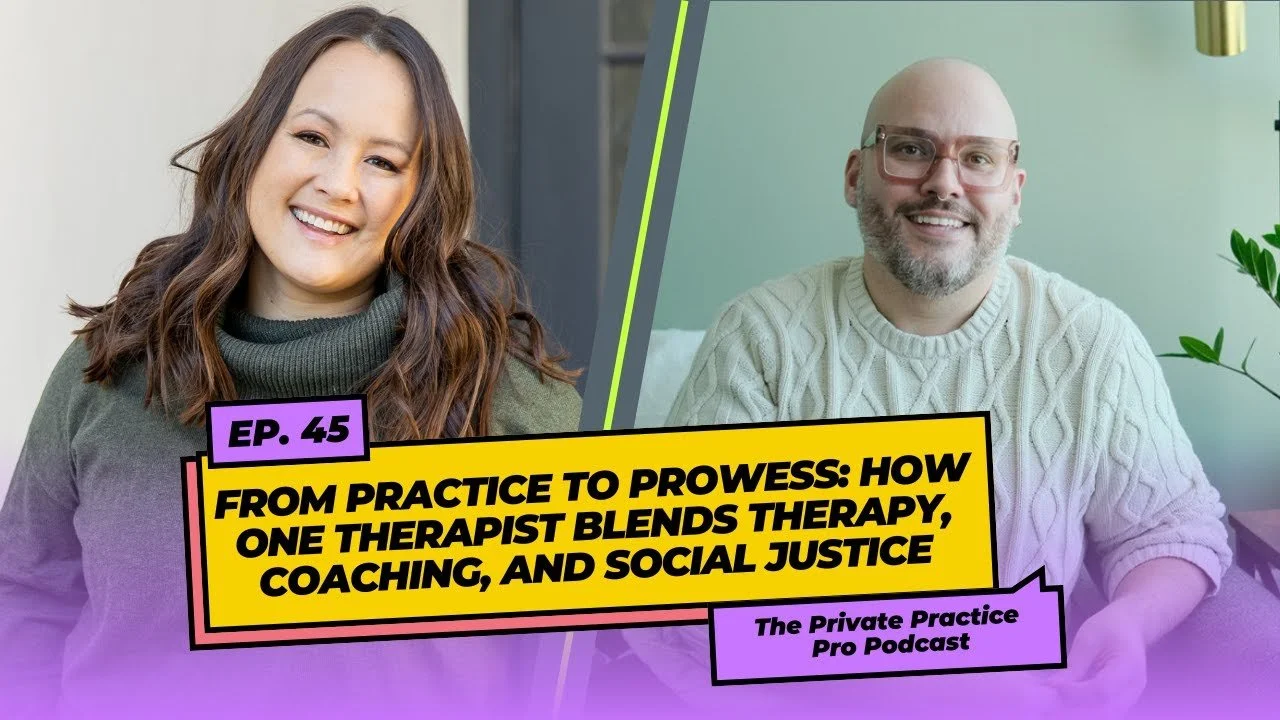
Jesse Proia is an LGBTQ+ Specialized Therapist and Writer. Queer mental health, LGBTQ+ community wellness, and social justice is his passion. He has dedicated his life to serving LGBTQ+ communities through his therapy practice, writing/research, Instagram account Holistic. Homosexual and community outreach projects. The core motivation for his work is to disseminate empowering information to Queer populations in efforts toward liberation.
Website: www.jesseproia.com
Email: jesseproia@jesseproia.com
Instagram: @Holistic.Homosexual